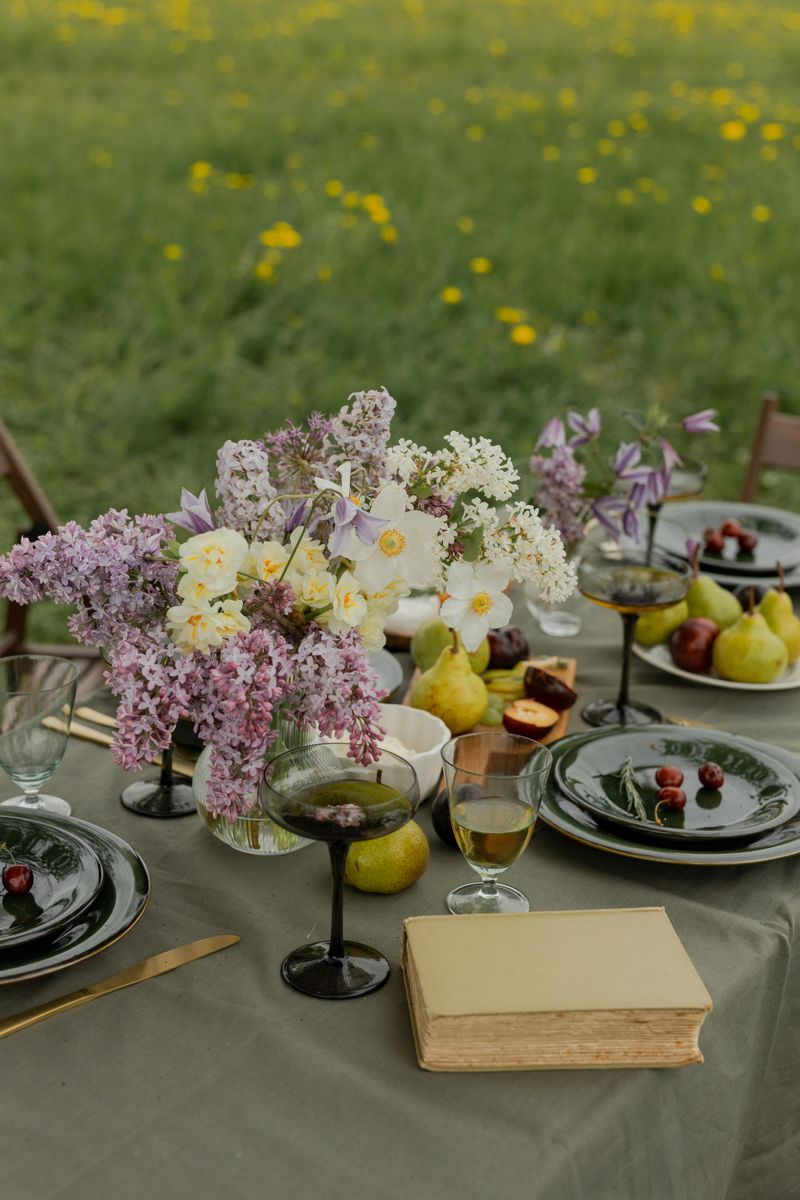
Flowers on a dinner table should look effortless, not arranged. The difference between a table that looks like a florist worked on it for an hour and one that looks casually beautiful isn't budget — it's knowing a few simple rules. Here they are.
The single biggest mistake people make with table flowers is using one large vase in the centre. It dominates, blocks sight lines, and almost always looks formal when you wanted relaxed.
Instead: use three small bud vases of different heights, clustered loosely together. Put two stems in each. The result is lighter, more interesting, and far easier to achieve than a full arrangement.
The different heights create natural movement and visual interest. The small scale means guests can see each other across the table. And three stems per vase is much cheaper than a full bouquet.
The formula: One tall vase (20–25cm), one medium (12–15cm), one low (8–10cm). Cluster them off-centre slightly rather than dead centre for a more natural look.
Three vases, five stems, seven flowers. Odd numbers look organic; even numbers look formal and symmetrical. This applies to the number of vases, the number of stems per vase, and the number of blooms.
When you buy grocery store flowers and split them between vases, aim for 3 stems per small vase rather than 2 or 4. The difference is subtle but immediately noticeable.
Why it works: Even numbers create a sense of balance and structure that reads as formal. Odd numbers create gentle tension that the eye finds more interesting and natural.
A centrepiece should never block the view between seated guests. As a general rule: keep flowers under 30cm tall for a dinner party. Anything taller and guests at opposite ends of the table can't see each other.
If you want height, use taper candles for the vertical element and keep flowers low. The combination of tall candles and low flowers is one of the most consistently beautiful table combinations.
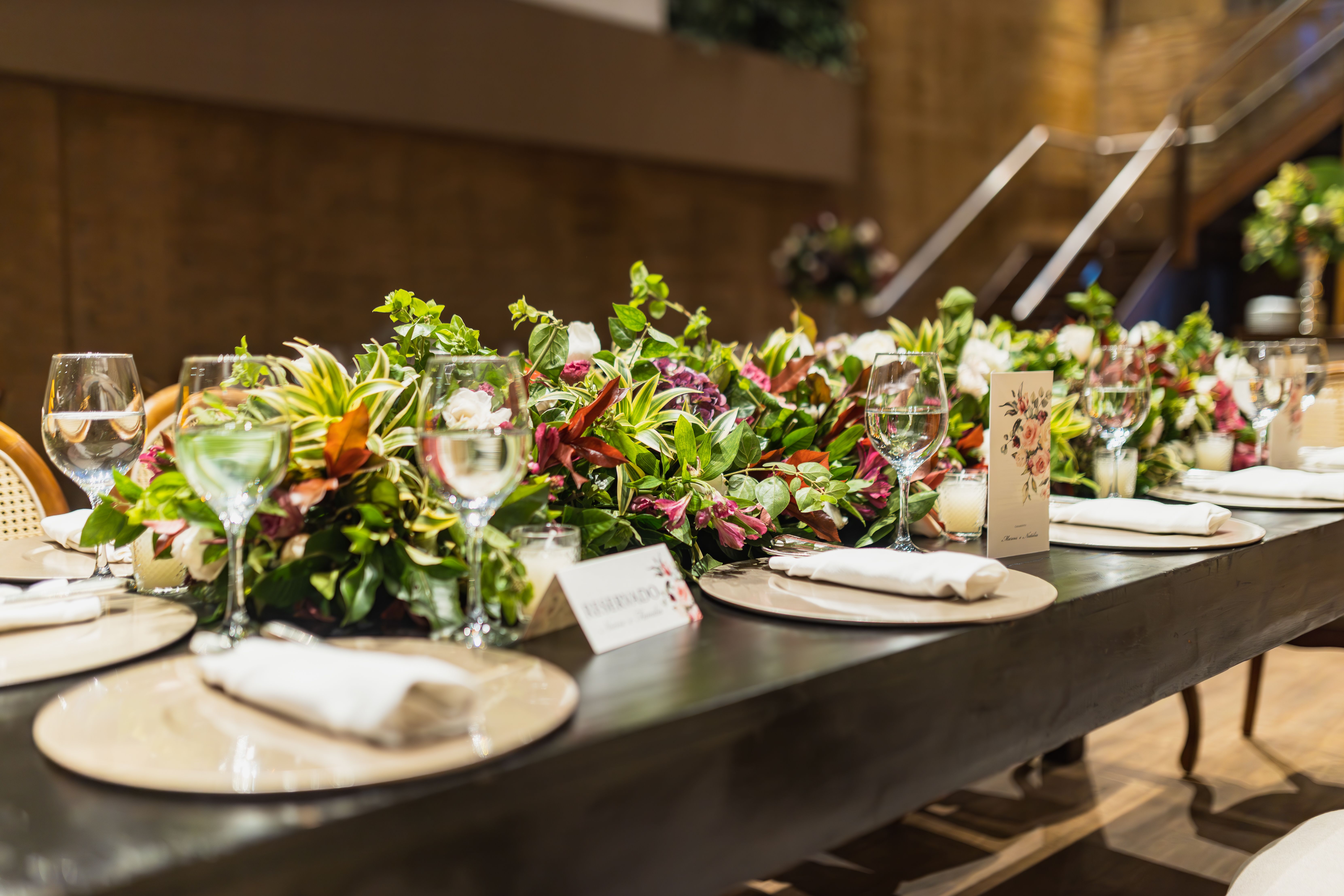
The test: Sit in a chair at your table and look across it with the centrepiece in place. Can you comfortably see the chair opposite? If yes, you're good.
You do not need expensive florist flowers for a beautiful table. Grocery store tulips, ranunculus, and eucalyptus photograph just as beautifully as anything from a specialist florist when they're styled well.
The key is picking one type of flower and using it consistently across all your vases rather than mixing many different blooms. One stem type in all three vases looks intentional. Three different flower types in three vases looks like leftover flowers.
Best grocery store picks: Tulips (spring), sunflowers (summer), dahlias (autumn), white roses (winter). Eucalyptus stems work in every season and add texture without competing with the blooms.
Most people leave flower stems too long. Cut them much shorter than feels natural — so the bloom sits just 5–8cm above the rim of the vase. This creates a lush, full look and keeps the height manageable for a dinner table.
Cut stems at a 45-degree angle under running water for maximum water uptake. Remove any leaves that would sit below the waterline — they rot quickly and cloud the water.
The refresh: Change the water and recut the stems the morning of your dinner party. Flowers that were bought two days ago will look just-picked with fresh water and a new cut.